

Every year since 2024, a pair of “self-adjusting glasses” ”auto-focus glasses” trend online. The advertisements claim these glasses automatically adjust to your eyesight, allowing you to see clearly whether you are reading your phone, working on a computer, or looking across the room. No eye exam. No prescription. Just one pair of glasses that supposedly works for everyone.
The promise sounds incredibly convenient. Anyone who wears prescription glasses knows the struggle of keeping multiple pairs around or updating prescriptions. So when a product claims to solve all of that with a simple pair of self adjusting blue tint glasses, it naturally gets attention.
The problem is that the technology being advertised in these viral ads usually does not exist in the way they claim.
How The Auto- Adjusting Glasses Scam Works
The scam starts with aggressive advertising. You will usually see the product promoted through Facebook ads, YouTube videos, or fake news style articles that look like independent reviews.
The marketing claims that the glasses contain special lenses that automatically adjust focus depending on what you are looking at. The ads often say the glasses work for both near and far vision, making them suitable for reading, driving, or using digital devices.
To make the product look legitimate, the sales pages include dramatic demonstrations showing blurry text becoming perfectly clear the moment someone puts on the glasses. They also display thousands of five star reviews and statements suggesting the glasses were developed using advanced optical technology.
What Buyers Usually Receive
Most buyers who order these glasses report receiving something very different from what was advertised.
The frames are usually lightweight plastic or rubber and feel cheaply made. The lenses may have a slight tint or coating that resembles blue light filtering, but there is no sign of any automatic focusing ability.
When worn, the glasses behave like ordinary non prescription lenses. People with vision problems often find that their eyesight remains blurry, especially when compared with their actual prescription glasses.
In short, the product does not perform the function it was marketed to do.
Why These Auto-adjusting Glasses Keep Appearing Under New Names
One reason this scam continues to circulate is that the product keeps getting rebranded.
When negative reviews start to build up around one name, the sellers simply launch the same glasses again with a new brand. The marketing campaign is refreshed, the website gets a new design, and the advertisements begin circulating again.
This is why consumers may encounter similar glasses being sold under names like NoBlu, MagVision, and Clarity Blue.
Each version claims to be a new breakthrough. In reality, it is usually the same concept being recycled.
Because new people see the ads every day, the cycle continues.
The Science Behind Vision Correction
To understand why these claims are unrealistic, it helps to look at how vision correction actually works.
When someone has myopia or farsightedness, the shape of the eye causes light to focus incorrectly on the retina. Prescription glasses correct this problem by using lenses with a specific optical power that bends light properly so images become clear.
That optical power is measured during an eye examination. Every person has a different prescription, and sometimes each eye requires a different correction.
Once a lens is manufactured with a certain optical power, it does not change on its own. The lens stays fixed.
For glasses to automatically adjust focus, the lens would need to physically change its optical properties. That requires complex technology such as mechanical adjustments or electronic lenses.
These types of systems exist in experimental or specialized eyewear, but they are expensive and far more complicated than the simple plastic lenses found in these viral products.
In other words, the idea that a cheap pair of glasses can automatically adjust to every person’s eyesight without any moving parts does not align with basic optical science.
Alternatives
If you’re like me and just need a good, reliable pair of blue light blocking glasses. Please get the Livho High Tech Blue Light Glasses on Amazon.com. They cost $15 and really protect my eyes from screen. I no longer suffer from dry eyes due to eye strain.
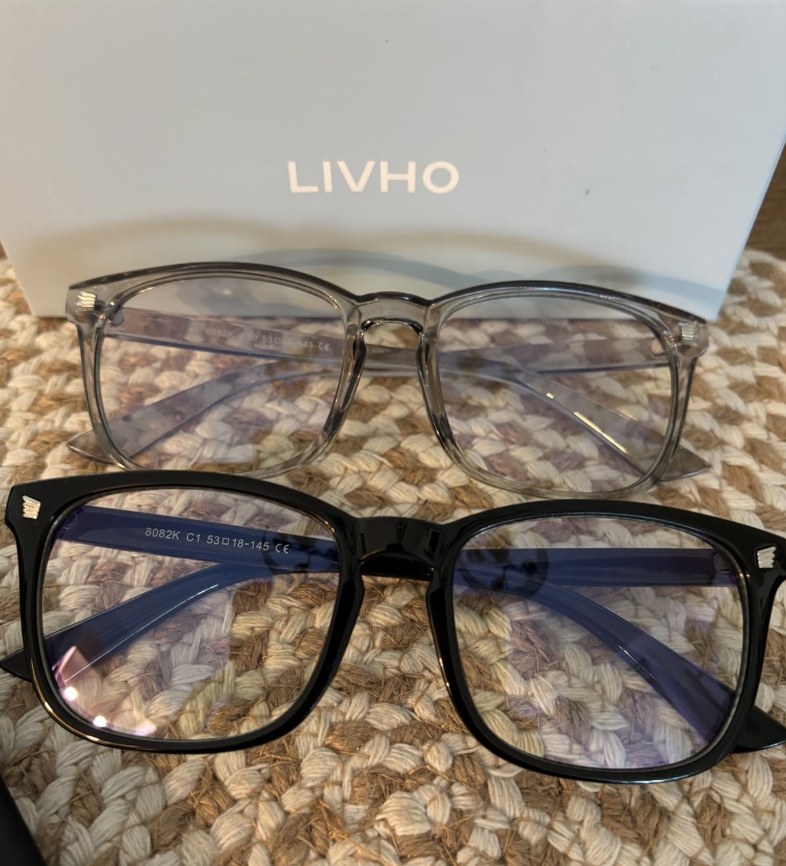
These are a very sturdy, high quality material – and the lenses block blue light incredibly well. The size was a bit big for my small face. But that is my fault for not paying attention to the measurements. They’re comfortable and don’t pinch, they’re sturdy but still lightweight so you don’t feel them on your face. It’s a nice touch to have the card and blue light added to the package so you can see how much blue light these block.
The Bottom Line
The idea of self adjusting glasses that automatically adapt to your eyesight sounds impressive. If such technology existed in an affordable form, it would genuinely change the eyewear industry.
But the viral products being promoted online under names like NoBlu, MagVision, and Clarity Blue are not that innovation.
They are typically inexpensive glasses wrapped in clever marketing campaigns that exaggerate what the product can do.
If you truly need vision correction, the safest option is still the traditional one. Get a proper eye exam and wear lenses designed specifically for your prescription.
When it comes to your eyesight, there is no universal shortcut.
And if a pair of glasses claims to magically work for everyone without an eye exam, that is usually the biggest red flag of all.